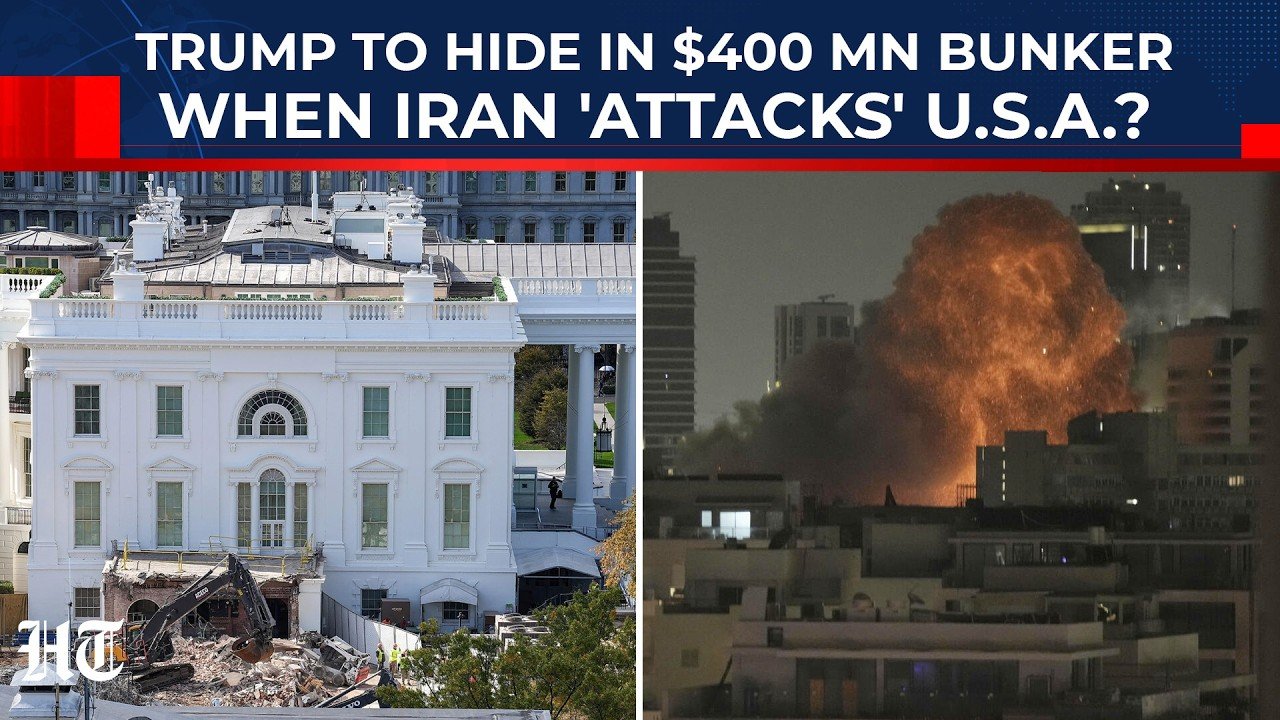
Rising War Tensions Put Washington on Edge
The ongoing conflict between the United States and Iran has rapidly escalated into one of the most serious geopolitical crises in recent years. What began as a strategic military operation has now evolved into a broader regional confrontation, with significant implications for global security, energy markets, and diplomatic relations. Reports suggest that thousands have already been killed and injured, while critical infrastructure across Iran has been targeted by coordinated strikes.
Amid this volatile backdrop, attention has increasingly turned toward Washington, where President Donald Trump is facing mounting pressure to manage both the war abroad and uncertainty at home. While the administration continues to project confidence publicly, behind the scenes, preparations appear to be underway for a worst-case scenario.
The $400 Million Ballroom Project Sparks Speculation
At the center of the controversy is a massive $400 million construction project at the White House—a grand ballroom that has drawn both praise and criticism. Officially, the ballroom is intended to host state functions and eliminate the need for temporary structures during high-profile events. Trump has described it as a “beautiful” addition that will enhance the prestige of the presidency and serve diplomatic purposes.
However, the timing of the project has raised eyebrows. During a period of intense military conflict, critics question why such a large-scale construction effort is being prioritized. The situation became even more controversial when Trump himself shifted focus from the Iran war to praise the ballroom project during a formal event honoring fallen soldiers, sparking backlash over perceived insensitivity.
Hidden Beneath the Surface: A Secret Bunker Upgrade?
What has truly fueled speculation is not the ballroom itself, but what may lie beneath it. Reports indicate that the construction project is tied to renovations of a highly classified underground bunker originally built during World War II. This facility, designed to protect U.S. leadership during times of extreme crisis, is now reportedly undergoing significant upgrades.
While officials have not publicly detailed the full scope of the work, sources suggest that the upgrades are part of broader efforts to modernize America’s emergency command infrastructure. In an era of advanced missile systems, cyber warfare, and nuclear threats, such facilities are considered essential for national security. The connection between the ballroom and the bunker has led to widespread speculation that the visible construction project may serve as a cover for more sensitive underground developments. Though no official confirmation has been given, the overlap between the two has become difficult to ignore.
War Strategy and Domestic Preparedness
President Trump has repeatedly emphasized his desire to bring the Iran conflict to a swift conclusion, reportedly aiming for a resolution within weeks. However, the realities of modern warfare have complicated these ambitions. Military leaders remain divided over the best course of action, with some advocating continued pressure while others push for diplomatic solutions.
At the same time, the administration appears to be preparing for the possibility that the conflict could expand or drag on longer than anticipated. Iran’s strategic position, particularly its influence over key waterways like the Strait of Hormuz, adds another layer of complexity. Any prolonged disruption could have severe consequences for global oil supplies and economic stability. In this context, enhancing secure facilities in Washington may be seen as a precautionary measure rather than a reaction to immediate danger. Governments around the world routinely update their emergency infrastructure during periods of heightened tension, even when no direct threat is imminent.
Critics Question Priorities
Despite these arguments, critics have been quick to question the administration’s priorities. For many, the idea of investing hundreds of millions of dollars in a ballroom during wartime appears tone-deaf. The optics of such a project—particularly when linked to a secret bunker—have only intensified public scrutiny.
Opponents argue that the administration should focus more on diplomatic efforts to de-escalate the conflict rather than on construction projects that may be perceived as self-serving or unnecessary. Others worry that the secrecy surrounding the bunker upgrades undermines transparency and accountability.
Political analysts note that domestic perception plays a crucial role in times of war. Public confidence in leadership can influence everything from economic stability to military morale. As such, controversies like the ballroom project risk becoming symbolic of broader concerns about governance and decision-making.
A Broader Pattern of Strategic Messaging
The situation also highlights a broader pattern in how the Trump administration communicates during crises. On one hand, the president has projected strength and confidence, claiming that the U.S. is making significant progress in the conflict. On the other hand, his comments and actions have sometimes appeared inconsistent, shifting between aggressive rhetoric and calls for quick resolution.
This dual approach may be part of a deliberate strategy, aimed at maintaining flexibility in negotiations while signaling resolve to adversaries. However, it can also create confusion, both domestically and internationally.
The ballroom project fits into this narrative in an unusual way. While it may serve practical purposes, it has also become a focal point for speculation about the administration’s true priorities and long-term plans.
Preparing for Uncertainty
Ultimately, the connection between the Iran war and the White House construction project reflects a deeper reality: uncertainty. In times of global conflict, governments must prepare for a wide range of scenarios, from rapid resolution to prolonged escalation. Upgrading secure facilities, including underground bunkers, is a standard part of such preparations. These measures are rarely discussed openly, given their sensitive nature. However, when they intersect with highly visible projects like a $400 million ballroom, they inevitably attract attention.
Whether the ballroom is primarily a diplomatic venue, a strategic necessity, or a combination of both remains a matter of debate. What is clear is that the stakes are high, and every decision is being closely watched.
Conclusion
As tensions with Iran continue to unfold, the spotlight on Washington shows no signs of fading. The $400 million ballroom project, once seen as a symbol of luxury and prestige, has taken on new meaning in the context of war and national security. For supporters, it represents forward planning and investment in critical infrastructure. For critics, it raises questions about priorities and transparency. And for observers around the world, it serves as a reminder that even the most visible symbols of power can conceal deeper layers of strategy.
In the end, the true significance of the project may only become clear with time. Until then, the intersection of war, politics, and construction at the heart of the White House will remain a subject of intense debate and speculation.